Cats are not small dogs. This sounds obvious, but it's a principle that the pet food industry took decades to fully embrace — and one that many cat owners still don't fully appreciate. Understanding what makes feline nutrition fundamentally different from canine nutrition is the foundation of keeping a cat healthy for their full 15–20 year lifespan.
Obligate Carnivores: What It Actually Means
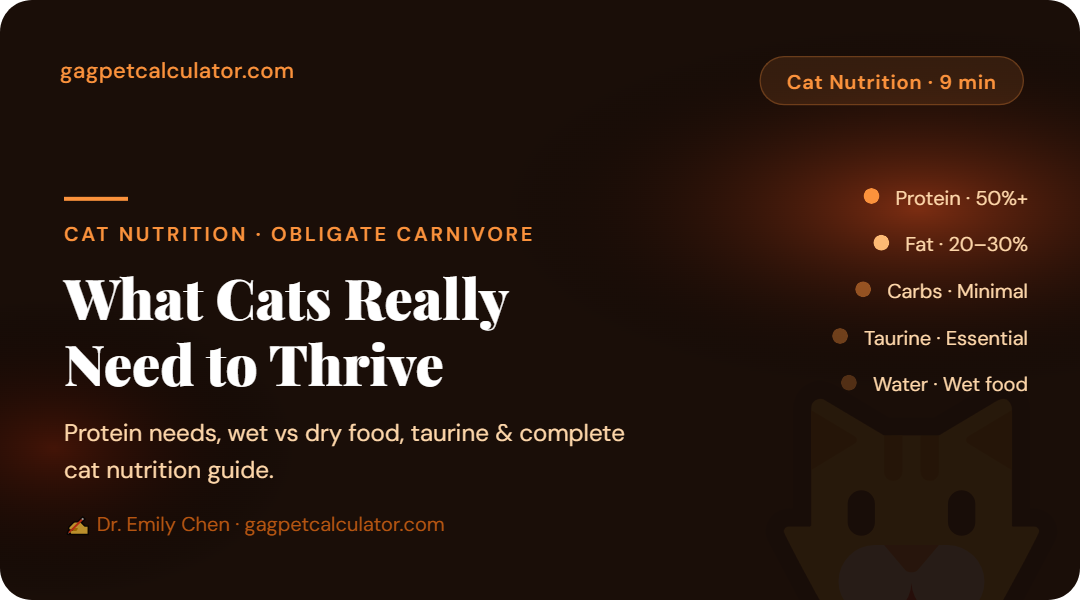
Cats are obligate carnivores — a biological designation that means they have a metabolic requirement for nutrients found only in animal tissue. Unlike dogs (omnivores) or humans (omnivores), cats:
- Cannot synthesize taurine — an essential amino acid vital for heart and eye health
- Cannot convert beta-carotene to vitamin A — they must get preformed vitamin A from animal tissue
- Cannot produce arachidonic acid from linoleic acid
- Have a limited ability to down-regulate protein metabolism — they use protein as a primary energy source even when carbohydrates are available
- Have very limited amylase activity — they're poorly adapted to digest starch
The Taurine Crisis That Changed Pet Food Forever
In the late 1980s, thousands of cats developed dilated cardiomyopathy (DCM) — an often fatal heart condition. The cause was identified in 1987: taurine deficiency from commercial cat foods that didn't contain adequate taurine. This discovery fundamentally changed how cat food is formulated. Today, all AAFCO-compliant cat foods must contain minimum taurine levels. But this history underscores how critical getting cat nutrition right actually is.
Wet vs Dry Cat Food: The Evidence
This is one of the most debated topics in feline nutrition. Here's what the evidence shows:
- Moisture: Cats have a low thirst drive evolved for a prey-based diet (~70% moisture). Dry food contains only 8–10% moisture. Chronic low-grade dehydration on a dry-only diet is directly associated with lower urinary tract disease and progressive kidney disease.
- Carbohydrates: Dry kibble typically contains 30–50% carbohydrates. Cats' limited amylase activity means carbohydrates contribute to obesity and potentially diabetes mellitus. Wet food typically contains 1–5% carbohydrates.
- Protein: Both formats can deliver adequate protein. Quality matters more than format for protein — look for named meat sources as first ingredients.
- Dental: The common belief that dry food cleans cats' teeth is largely a myth — only VOHC-certified dental diets have evidence for this.
Consensus: For most cats, a diet incorporating wet food — either as the primary food or as a significant supplement — is associated with better long-term urinary and kidney health.
How Much to Feed Your Cat
Adult cats typically need 200–300 kcal per day depending on size, activity and reproductive status. Spayed/neutered indoor cats have ~20% lower calorie needs than intact or active cats. Use our portion calculator for exact amounts based on your cat's profile.
"The most impactful thing most cat owners can do for their cat's long-term health is increase dietary moisture. Kidney disease is the number one cause of death in older cats — and it's strongly linked to chronic dehydration."
Life Stage Nutrition for Cats
- Kittens (0–12 months): High protein, high calorie kitten formula. 3–4 small meals daily.
- Adults (1–7 years): Balanced adult formula. 2 meals daily with controlled portions.
- Mature/Senior (7–14 years): Highly digestible protein. Lower phosphorus to protect kidneys. Increased moisture.
- Geriatric (15+ years): Some geriatric cats need increased calories due to reduced digestive efficiency. Biannual bloodwork to monitor kidney and thyroid function.
Calculate My Cat's Daily Portions
Get exact daily food amounts for your cat based on their age, weight and lifestyle — free and instant.
Calculate My Cat's Daily Portions →